Materials & Sleep
Organic Latex Mattresses: What to Check Beyond the Material Label
“Organic latex” sounds like a complete answer. On a mattress, it is only the opening line. The cover, comfort layers, adhesives, fire-safety approach, construction and care requirements all contribute to what you are actually bringing into the bedroom.
A thoughtful guide to reading the finer print on natural latex organic mattresses—and asking better questions before choosing one.
There is an appealing clarity to a mattress label that says organic latex. It suggests a material with a known origin, a considered production story and a softer footprint than an anonymous block of foam. Yet a mattress is not a single ingredient. It is a layered object: a cover wrapped around a comfort surface, perhaps wool or cotton beneath it, and a core designed to support the body night after night.
That distinction matters. A mattress may contain certified organic latex while its cover, wool, cotton or other components have different origins and standards. Another may use natural latex without making an organic claim at all. And a product described broadly as “organic” may not make clear which parts of its construction the word refers to.
The more useful approach is not to treat a label as a verdict, but as an invitation to investigate. Read the component list. Look for the name and scope of each certification. Find out how the layers are arranged, what firmness means in practical terms, and what the maker recommends for care. These details turn a persuasive phrase into information you can actually use.
Start with the whole mattress, not the headline
Latex is often the star of the description, but it may sit alongside several other materials. A natural latex mattress can include cotton fabric, wool batting, a separate support core, or a combination of latex and coils. Each component has its own role, and each raises a different question about sourcing, certification and performance.
Begin by asking for a layer-by-layer breakdown. A useful product description should identify the cover material, the comfort layer, the support system and any additional padding or fire barrier. It should also say whether the latex is natural, synthetic or blended, and whether the word “organic” applies to that latex specifically or to a wider set of materials.
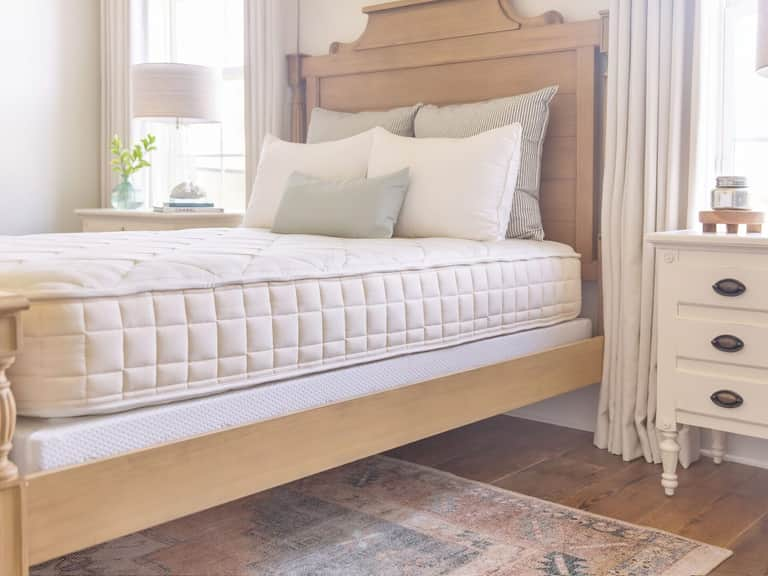
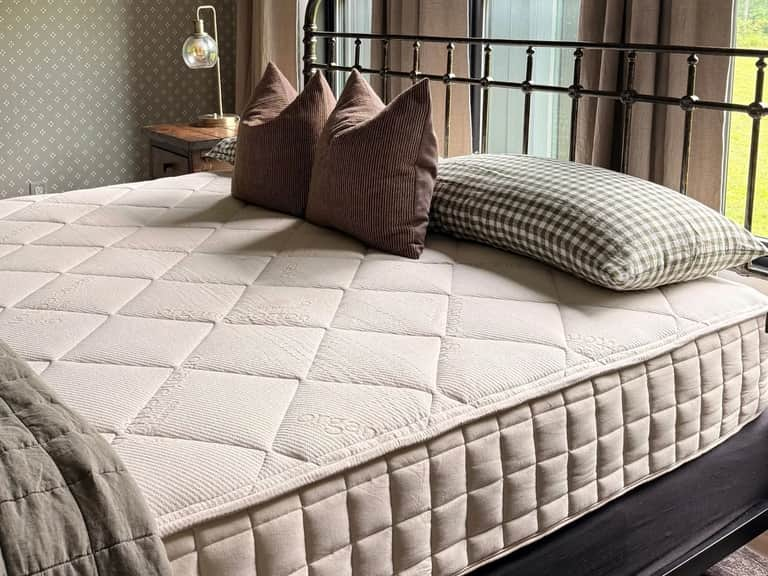
For example, the Naturepedic Serenade Organic Hybrid Mattress is described as combining an organic Dunlop latex comfort layer with encased coils, organic wool and organic cotton. That kind of component-level description gives readers a clearer starting point than a broad label alone. It also makes clear that the mattress is a hybrid: latex contributes cushioning, while coils form the support system.
Do not assume every component shares the same certification simply because one does. A certified latex layer does not automatically establish the certification status of the cotton cover or wool batting. Look for explicit wording about each material, and ask the manufacturer to clarify any part of the construction that is missing from the product page.
Understand what “organic” is—and is not—telling you
“Organic” is not a universal synonym for natural, chemical-free, non-toxic or environmentally perfect. It is a claim that should be connected to a defined standard, a certifying body and a specific material or product scope. The standard matters; so does the exact item being certified.
For latex, shoppers may encounter GOLS, the Global Organic Latex Standard. GOLS certification relates to organic latex and includes requirements across the relevant supply chain. It is a more precise claim than an unexplained phrase such as “eco latex,” but it is still important to check whether the certificate applies to the latex used in the mattress and whether the product listing gives enough information to confirm that connection.
GOTS, the Global Organic Textile Standard, is commonly associated with textile fibers and finished textile products. It may be relevant to a mattress cover or wool component, depending on the product and certification scope. It does not, on its own, certify a latex core. The distinction is easy to miss when several logos appear together, so read the wording beside each mark rather than treating a collection of badges as one blanket endorsement.
Other labels may address emissions, material safety or manufacturing practices rather than organic agricultural sourcing. Those can be useful, but they answer different questions. A certification for emissions, for example, should not be read as evidence that the mattress is organic. A responsible product description explains what a standard evaluates and which component it covers.
- Find the exact standard. Look for the full certification name, not just a vague “certified” claim.
- Check the scope. Is the certificate for latex, textiles, the finished product, or the manufacturer’s facility?
- Seek traceable details. Product pages should connect the claim to the material used in the mattress.
- Separate different assurances. Organic sourcing, emissions testing and general material safety are related topics, but not interchangeable ones.
Certifications can help make complex supply chains more legible, but they do not replace a clear bill of materials. The best descriptions make both the standard and the relevant material easy to identify.
Ask how the latex is made
Natural latex is made from latex harvested from rubber trees, but the route from raw material to mattress layer can vary. Two processes shoppers may see named are Dunlop and Talalay. Both produce latex foam, but they differ in how the material is processed. The process name is not a certification, and it does not tell you by itself whether the latex is organic.
Dunlop latex is produced through a process in which latex is placed into a mold, heated and cured. Talalay uses additional processing steps, including vacuum expansion and freezing before curing. These methods can produce layers with different characteristics, although the feel of a finished mattress also depends on the formulation, thickness, firmness, upholstery and the layers placed above and below the latex.
Ask the maker to identify the process used and the role of the layer. Is it a comfort layer intended to cushion pressure points, or a deeper support layer? How thick is it? Is it one continuous piece or a combination of layers? A phrase such as “natural latex construction” can conceal a lot of variation.
It is also worth distinguishing natural latex from synthetic latex and blends. Natural latex originates from rubber-tree sap; synthetic latex is manufactured from petrochemical ingredients; blends may contain both. Clear disclosure helps shoppers understand what they are comparing. If a listing only says “latex,” request the composition rather than inferring it from the product name.
Look closely at the cover and comfort layers
The first touch of a mattress is often its cover, yet the fabric is sometimes relegated to a single line near the bottom of a specification sheet. Cotton and wool are common in natural and organic mattress constructions, but their presence does not automatically mean they are certified organic. Check the fiber content, certification and whether the cover is removable.
Wool may be used as a cushioning layer, a moisture-managing fiber or part of a mattress’s approach to meeting flammability requirements. Cotton may appear in the cover, quilt or internal batting. A mattress might also use other fibers or components. Ask where each sits in the construction, whether it is blended with other materials, and how the manufacturer treats the finished textile.
Comfort layers are not merely decorative padding. Their thickness and composition affect how quickly the surface responds, how deeply the body settles and how the latex feels in practice. A firm latex core under a softer quilted cover may feel different from a mattress with a plush latex layer directly beneath a thin cover. That is why the phrase “latex mattress” cannot tell you whether a particular bed will feel right.
For people concerned about material exposure, it can be helpful to ask whether adhesives are used between layers, whether the cover contains treatments or finishes, and how the product meets fire-safety rules. These are questions about the finished mattress, not just its headline ingredient. A manufacturer should be able to explain its construction in plain language without relying on a string of reassuring adjectives.
Read the construction like a map
A mattress specification should describe the sequence of its layers, from the sleep surface down to the base. This is the construction map: it shows what supports the body, what cushions it, and how the different materials work together. Without it, shoppers are left comparing names rather than actual designs.
Consider whether the mattress is all-latex or a hybrid. An all-latex model relies primarily on latex layers for comfort and support. A hybrid combines latex with another support system, often coils. Neither format is automatically better; the right choice depends on preferred feel, sleep position, body proportions, bed frame and personal comfort.
Thickness is useful context, but it is not a quality rating. A taller mattress may contain more material or a more elaborate arrangement of layers, yet height alone does not establish durability or suitability. Ask for the thickness of the latex layer itself, the depth and type of the support system, and any information about the density or firmness of the materials.
Construction also affects practical considerations such as motion transfer, edge feel and compatibility with an adjustable base. For a hybrid, ask whether the coil system is designed for the intended foundation. For an all-latex model, check the maker’s guidance on slats, platform surfaces and ventilation. A well-matched foundation helps the mattress perform as intended and can reduce avoidable strain on its structure.
When comparing two natural latex organic mattresses, write down the layers in order rather than relying on product titles. The exercise is simple, but it reveals important differences: one design may use latex over coils, while another has a deeper latex core; one may have wool above the latex, while another uses cotton quilting. Those are meaningful distinctions, not fine-print trivia.
Firmness is personal, not a certification
Firmness descriptions are not perfectly standardized. “Medium,” “cushion firm” and “firm” are useful signposts, but they may vary between brands and across mattress designs. Body weight, shoulder width, hip shape, preferred sleep position and the feel of the bed base all influence how a mattress is experienced.
Side sleepers often look for enough cushioning around the shoulder and hip to avoid a harsh pressure point, while back sleepers may prefer a surface that feels more evenly supportive. Stomach sleepers often seek a flatter feel that does not allow the torso to sink too deeply. These are broad tendencies, not rules; comfort is individual, and a mattress cannot be selected responsibly by sleep position alone.
If a mattress offers multiple firmness options, check what changes between them. Is the latex formulation or thickness different? Does the coil support change? Or does the designation refer to a more general comfort impression? Ask whether firmness is available on both sides, and whether the retailer has a trial period, exchange conditions or clear return terms.
Where possible, test the mattress in a suitable setting and spend enough time in your usual sleeping positions to notice how it feels. A quick press of the hand is not a reliable stand-in for lying down. If shopping remotely, gather precise information about firmness, dimensions, trial terms and the foundation required before placing an order.
Care, weight and the realities of ownership
Natural materials can require thoughtful care. A removable, washable cover may be convenient, but not every mattress is designed to be opened or laundered. Some covers are fixed; some can be spot-cleaned only. Wool and latex layers should not be treated as if they were ordinary bedding. Follow the manufacturer’s instructions and avoid improvised cleaning methods that could damage the materials or affect a warranty.
Before buying, find out whether the mattress should be rotated, whether it is reversible, and what type of foundation it needs. A product that should not be flipped may still benefit from periodic rotation, but the correct schedule depends on its design. The product care guide, not a generic rule of thumb, should be your reference.
Latex mattresses can be heavy, particularly when they contain substantial latex layers. That affects delivery, moving, rotating and disposal. Confirm whether delivery includes room placement, setup or removal of an old mattress. If the mattress arrives compressed, follow instructions for unpacking and allow the recommended time for it to expand before evaluating its full feel.
Warranty language deserves the same attention as the material list. Look for the length of coverage, what counts as a defect, the required foundation and any conditions related to care. A warranty is not a prediction of exactly how long every mattress will feel unchanged; it is a contract with specific terms. Read those terms before assuming that a long warranty guarantees a particular performance outcome.
A practical checklist for the product page
When the specifications start to blur together, return to a short set of questions. A transparent listing should make it reasonably easy to find answers—or to contact the manufacturer for them.
- What is the exact composition of the latex: natural, synthetic or blended?
- Which latex process is used, and what is each layer’s thickness and purpose?
- Which components are certified organic, and by which named standard?
- Does the certification apply to the latex, textiles, finished product or another part of the supply chain?
- What are the cover, quilting, wool or other comfort layers made from?
- Are adhesives or added treatments used? How does the mattress meet fire-safety requirements?
- Is the mattress all-latex or a hybrid, and what support system does it use?
- How is firmness described, and what are the exchange or trial conditions?
- Can the cover be removed or washed? What cleaning and rotation guidance applies?
- Which foundations are compatible, and what does the warranty require?
No single answer determines whether a mattress is right for you. Together, however, these details offer a more honest portrait than a headline claim. They let you compare like with like, notice where information is missing and decide which compromises matter most.
Beyond the label, towards a better-informed choice
Choosing an organic latex mattress does not require becoming a materials scientist. It does require looking past the neatness of the phrase and into the architecture beneath it. Ask what the latex is, where the certification applies, what sits around the core, how the mattress is assembled and how it should be cared for.
The most useful product descriptions do not ask you to take a claim on trust. They name the materials, explain the layers and distinguish organic sourcing from other kinds of testing or assurance. They make room for nuance: a mattress can combine natural and manufactured components, and a hybrid can pair latex with coils without making the latex claim meaningless. Precision is not a flaw in the story; it is what makes the story credible.
For the shopper, the reward is clarity. You can weigh feel against construction, certification against care requirements, and a compelling label against the specifics of the product itself. In a category where “natural” and “organic” can sound like a complete design philosophy, the finest detail is often the most valuable: knowing exactly what each layer is doing, and why it is there.