Bedding · Materials & Care
Naturepedic Crib Sleep Surfaces: Materials, Design, and Care
A crib sleep surface is a study in thoughtful restraint: a firm, level foundation, a close-fitting sheet, and materials chosen with care. Understanding how cotton, waterproof layers, construction and upkeep work together can help families compare options with clarity—without confusing comfort details with the essentials of infant sleep safety.
Published October 30, 2026
The quiet logic of a crib sleep surface
For adults, bedding is often an invitation to layer: a softly quilted pad, a lofty topper, a beautifully textured coverlet. A crib calls for a different sensibility. Its sleep surface should be firm, flat and appropriately fitted, with the mattress and sheet used according to the manufacturer’s instructions. In this setting, the most meaningful design decisions may be the least conspicuous: the composition of the cover, the placement of a moisture barrier, the depth of the mattress, and how easily the surface can be cleaned.
Naturepedic offers a useful point of reference for exploring these choices. A crib mattress and a waterproof crib pad are not the same product, even when both contribute to the overall sleep setup. A mattress supplies the underlying support; a pad, where appropriate and specifically designed for the crib, adds a separate layer of protection. The product label, dimensions and care directions matter as much as the material name on the front of the package.
That distinction is especially important for families researching organic crib mattresses and organic cotton crib bedding. “Organic” describes a material or a certified production standard; it does not, by itself, explain whether a product is suitable for a particular crib, how it fits, or how it should be used. A considered choice starts with the complete construction and the intended use.
A closer look at organic cotton
Cotton’s appeal is tactile and practical. It can feel soft against the skin, allows air to move through a fabric more readily than some tightly coated surfaces, and is familiar to most households. In crib products, cotton may appear as a woven outer cover, a jersey knit, a flannel layer or a fabric facing a waterproof membrane. Each construction has a different hand and purpose, so “cotton” is only the beginning of the description.
Organic cotton refers to cotton produced under an organic agricultural standard. Where a product carries a third-party certification, the certification can offer more specific information about how the material and its processing were assessed. It is sensible to check exactly which component is certified: a cotton cover, for example, is not necessarily evidence that every layer in a finished product has the same certification. Look for the named standard and verify its scope rather than relying on a broad claim alone.
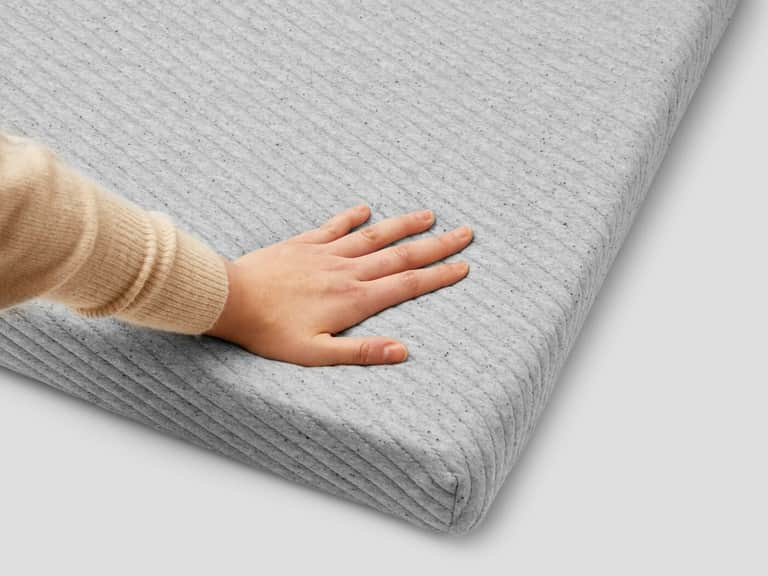
For a crib mattress cover, fabric construction also influences the feel of the surface and the way it responds to everyday use. A knit can stretch and conform differently from a crisp woven fabric. A quilted layer adds texture and loft, while a smooth cover may be easier to wipe down. Neither description is a substitute for checking the mattress maker’s instructions or the product’s intended purpose. The central question is not which fabric sounds most luxurious; it is whether the complete product is appropriate, well fitted and straightforward to maintain.
Families comparing cotton fabrics may also notice differences in laundering guidance. Some covers are removable; others are not intended to be taken off. A product may call for spot cleaning, gentle machine washing or a particular drying method. Those distinctions can affect daily convenience and the life of the fabric, and they should be considered before purchase rather than after the first spill.
Waterproof layers: protection without guesswork
Moisture protection can help shield a mattress from spills and routine mess, but waterproof construction varies. A water-resistant weave, a coated fabric and a laminated membrane are not interchangeable descriptions. Some designs place a thin barrier between fabric layers; others use a treated surface. The manufacturer’s specification is the reliable source for understanding what is present and how the product should be cleaned.
A waterproof layer can influence breathability, hand feel and drying time. In a well-described construction, the barrier is part of a clearly defined product rather than an unexplained finish. Families may wish to look for the material name, whether the layer is bonded or removable, and any information about the product’s testing or certification. If a label uses terms such as “chemical-free,” “non-toxic” or “breathable,” seek the supporting details and read the limitations carefully. Marketing language is not a replacement for an exact materials list.
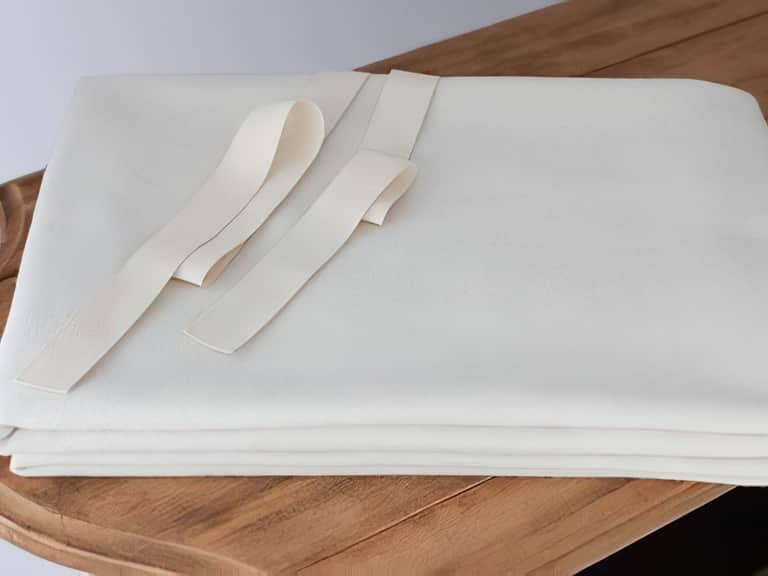
Naturepedic’s flat waterproof organic cotton crib mattress pad is one example of a layered approach. Its product description identifies organic cotton flannel at the top, organic cotton muslin underneath, and a thin waterproof layer between the outer fabrics. The listed size is 28 by 52 inches, and the pad is described as layering under a crib sheet. Families can review the product details here, then confirm current specifications and fit directly against their crib mattress and the manufacturer’s guidance.
That construction illustrates a useful principle: a waterproof crib pad is not simply “cotton” or “waterproof.” It combines fabrics and a barrier, each with a distinct role. Before choosing any waterproof crib mattress pad, confirm the intended crib use, exact dimensions, compatible mattress size and installation instructions. A pad that does not lie flat or fit as intended is not a good match, however appealing its material story may be.
Fit is a design feature
In a nursery, precision is its own form of elegance. A crib mattress should fit the crib as specified by the crib and mattress manufacturers, and any sheet or approved accessory should be sized for that particular setup. The product’s stated dimensions are a starting point, not a reason to assume universal compatibility. Construction, mattress profile and the design of the crib can all affect how a layer sits.
Some pads are flat and intended to be placed beneath a fitted sheet; others have elasticized sides or corner straps. Those formats should not be treated as interchangeable. A flat design may depend on correct layering and a smooth, secure fit; an elasticized design must match the mattress dimensions and depth. Read the instructions for the specific item, and do not stretch, fold or improvise a product to make it fit.
It is also worth distinguishing a protective pad from a topper. Toppers are generally designed to change the feel of a sleep surface by adding cushioning. That purpose is different from protecting a mattress, and extra softness is not automatically appropriate for a crib. Follow current safe-sleep guidance from a qualified pediatric health authority and the instructions supplied with the crib and mattress. If there is uncertainty about a product’s suitability, ask the manufacturer or a health-care professional rather than relying on a retailer’s general description.
For infant sleep, the familiar styling instinct to add more layers should be set aside. Keep the sleep space simple and use only items that are specifically suitable and permitted by the applicable safety guidance. A decorative nursery aesthetic can come from paint, lighting and textiles outside the sleep space; it need not be built into the crib itself.
Breathability, comfort and the limits of a label
“Breathable” is a word that appears frequently in bedding descriptions, but its meaning depends on the product and the evidence behind the claim. A cotton face fabric may feel airy, while a waterproof layer elsewhere in the construction changes how the full product behaves. No single adjective tells the complete story. Seek details about the fabric, barrier, layering and intended use, and treat broad performance claims as prompts for closer reading.
Likewise, “natural” and “organic” are not shorthand for every quality a family may care about. A natural fiber may still require careful cleaning; an organic fiber can be part of a product that includes other materials; and a certified component does not necessarily certify the entire finished item. Specificity is more useful than an appealing generality. A clear label names the material, identifies the relevant certification where applicable, and explains care in plain language.
Comfort is also not measured in the same way for a crib as it is for an adult mattress. Parents may understandably be drawn to plushness, softness and cushioning, but those qualities should never override the intended firmness and safe-use requirements of an infant sleep surface. Design choices in this category are best judged by suitability, fit and practical performance—not by resemblance to a luxury adult bed.
Care that protects the fabric and the fit
Maintenance begins with the care label. A waterproof pad may have different washing and drying requirements from a cotton sheet or removable mattress cover. High heat, bleach, harsh detergents or fabric softeners can affect some materials and finishes; on the other hand, assumptions about gentleness should not replace the product’s actual instructions. Keep the label or save the manufacturer’s care guidance where it is easy to find.
For the Naturepedic flat crib pad described above, the product information lists machine washing and drying. Confirm the current care directions supplied with the pad, particularly before the first wash. If the instructions allow machine laundering, use the recommended cycle and temperature, and ensure the item is fully dry before returning it to use. Damp fabric stored or layered for an extended period can develop an unpleasant odor and may be harder to keep fresh.
Routine care can be simple and composed. Keep a clean, correctly sized replacement sheet available; address spills promptly according to the relevant care instructions; and inspect seams, elastic, stitching and the waterproof layer periodically. Look for changes such as tears, delamination, stretched edges or persistent odors. If the product appears damaged, no longer fits properly, or differs from the way it was designed to perform, consult the manufacturer about repair or replacement rather than continuing to use it by default.
Do not assume that every crib mattress itself can be washed or that a cover is removable. Some products are designed for surface cleaning only. Taking a cover off when it is not intended to be removed can compromise construction or create a fit issue when it is replaced. The care instructions are part of the product’s design, not an afterthought.
A thoughtful comparison checklist
When comparing Naturepedic crib sleep surfaces or similar products, a short set of practical questions can bring the details into focus:
- What is the product? Identify whether it is a mattress, cover, sheet or waterproof pad, and what role the manufacturer intends it to play.
- What is in each layer? Note the face fabric, backing, fill and any waterproof membrane rather than relying on a single headline material.
- What does “organic” refer to? Check the specific component, named certification and certification scope.
- Will it fit? Compare the stated dimensions and design with the crib mattress, and follow the maker’s fit instructions.
- How is it cleaned? Confirm washing, drying and stain-care directions, including any restrictions.
- Is it suitable for this use? Follow the crib and mattress manufacturers’ instructions and applicable safe-sleep guidance; do not infer suitability from a natural-material claim.
- What happens over time? Check warranty terms, replacement guidance and the signs of wear that would make the product unsuitable for continued use.
This approach makes comparison less about collecting attractive claims and more about understanding the object in front of you. A transparent product description should make its construction legible: materials, dimensions, intended use and care should be easy to locate. When a detail is missing, it is reasonable to ask the manufacturer for clarification.
Materials with a longer story
For a farm-to-mattress perspective, cotton offers a reminder that a finished crib surface begins far from the nursery. Fiber is grown, harvested, processed, spun and woven or knitted before it becomes fabric. A waterproof pad adds further steps: the barrier must be produced and integrated with the outer textile, and the complete piece must be cut, sewn and finished. Each stage can shape the product’s feel, durability and environmental footprint.
Organic certification can help make part of this journey more visible, but it does not answer every question about a product’s lifecycle. Families interested in sourcing can look for clear origin information, named standards and specific disclosures about the materials used. It is useful to distinguish what is documented from what is inferred: an organic cotton layer tells us something about that fiber’s production standard, but not necessarily about the entire supply chain or the impact of every component.
The same measured perspective applies to waterproof layers. Protection may extend the useful life of a mattress by helping shield it from moisture, but the membrane’s composition, manufacturing and end-of-life options are separate questions. A balanced materials comparison acknowledges trade-offs rather than assigning a simple “good” or “bad” label to an entire category. For many households, the clearest first step is a product with a complete, understandable specification and care plan.
The considered choice
A well-chosen crib sleep surface is not defined by embellishment. It is defined by clarity: an appropriate mattress, a correct fit, carefully described materials and maintenance instructions a family can realistically follow. Organic cotton may appeal for its fiber sourcing and familiar softness; a waterproof layer may offer practical protection; thoughtful construction brings those elements together. Each feature should be considered in the context of the full product, not in isolation.
Naturepedic’s layered flat pad makes the point neatly. Its listed cotton fabrics and thin waterproof interior can be understood as separate parts of one practical design. The important next steps are equally straightforward: verify the latest product details, confirm compatibility with the specific crib mattress, follow all fitting and care instructions, and keep the sleep space consistent with current safe-sleep guidance.
In the end, the most reassuring nursery is often the least complicated. Choose materials with labels you can interpret, a construction you understand and care instructions you can maintain. Let thoughtful sourcing and practical design work quietly in the background, leaving the crib’s essential purpose—an appropriate, simple sleep space—at the center.