Pillows are a key part of bedding, supporting the head and neck while contributing to a comfortable sleep surface. Their shape, loft, firmness, and fill influence how they feel and function. Choosing a pillow suited to personal sleeping habits can complement sheets and mattresses without replacing the need for appropriate mattress support.
Common pillow fills include plant fibers, natural latex, feathers, and synthetic materials, each with distinct qualities. Fill affects weight, softness, resilience, and how a pillow responds to pressure. Cover fabric and construction also matter: breathable materials can help manage warmth, while a well-made cover helps contain the fill during regular use.
Sleep position can help guide pillow selection. Side sleepers often prefer more loft to fill the space between the shoulder and head, while back sleepers may find moderate loft more comfortable. Stomach sleepers commonly need a lower profile. Individual comfort varies, so pillow height and firmness are best considered alongside mattress feel and body proportions.
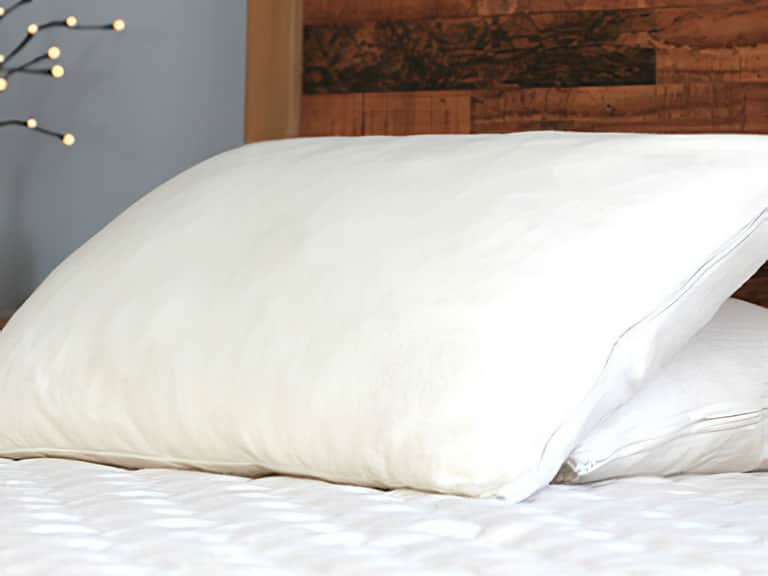
The Savvy Rest Organic Kapok Pillow features kapok, a lightweight plant-based fiber used as pillow fill. Its soft, airy character provides cushioning and a distinct alternative to many conventional synthetic fills. Pillow performance depends on the amount and arrangement of fill, as well as the cover, so those details are useful when evaluating loft and feel.
In a bedding setup that includes organic mattresses or organic crib mattresses, pillows are a separate component and should be chosen for the intended sleeper and use. Adult pillows are not appropriate for infants’ sleep spaces; safe-sleep guidance recommends keeping pillows and other soft objects out of a baby’s sleep area. Care instructions also vary by product and cover material.
 Bedding